Utah
46 Companies Headquartered in Utah
Academic Innovations, AF Connect Fiber, America First Credit Union, Ancestry.com, Beyond, Inc., bioMerieux, Black Rifle Coffee Company, Boostability, Boss Retirement, Brex
Utah Average CBR Summary
Avg. Company Rating
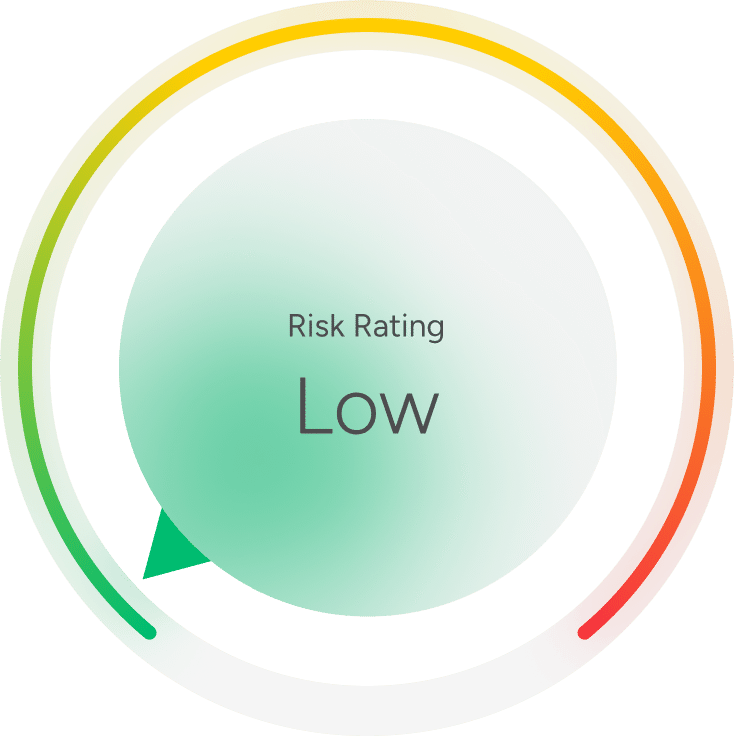
Avg. Rating Criteria
| Criteria | Risk Level |
|---|---|
| Cancellations | Lower Risk |
| Discriminatory Philanthropy | Medium Risk |
| Employment Protection | Medium Risk |
Corporate Weaponization
| Criteria | Risk Level |
|---|---|
| Advocacy Bias | Medium Risk |
| Funding | Lower Risk |
| Political Actions | Lower Risk |
Corporate Governance and Public Policy
State Leadership
State Pension Fund Summary
Utah has one main public pension system: the Utah Retirement System (URS).
- The URS board represents eligible public state and local employees and consists of 7 members: 4 appointed by the Governor, the State Treasurer, 1 school employee appointed by the Governor, and 1 public employee appointed by the Governor.
- URS uses Glass Lewis for its proxy advisory services.
- According to its 2024 Annual Comprehensive Financial Report, the URS’ general investment consultant is Callan.
- Utah maintains the Permanent State School Fund, a constitutional endowment functioning as the state’s sovereign wealth fund for public education: when Utah became a state in 1896, the U.S. Congress granted approximately six million acres of land to benefit public education in perpetuity, and revenue from these school trust lands is deposited permanently into the Fund. The endowment is administered by the School and Institutional Trust Funds Office (SITFO), created within state government by Chapter 426 of the 2014 General Session under Utah Code Title 53D. As of June 30, 2025, the School Fund’s market value stood at $3,747,683,036.
- The SITFO board of trustees consists of the state treasurer and four additional members who are appointed by the state treasurer on a nonpartisan basis from a list of qualified candidates nominated by the nominating committee, with expertise in institutional investment management and six-year terms; the state treasurer is the chair of the board (Utah Code §§ 53D-1-301, 53D-1-302).
- Like the pension funds above, SITFO holds public equities — public equity stood at 31.62% of the portfolio against a 32.00% interim target as of June 30, 2025 — making its proxy voting record a relevant indicator of how Utah leverages its sovereign wealth in support of or against ESG principles.
- Note: The data below on state voting does not include the votes cast through the public equities of Utah’s Sovereign Wealth Fund.
The “By Asset Manager” and “Asset Manager Voting” tables show the proxy voting records of the state’s asset managers who manage the pensions’ stock market portfolio through index, exchange-traded, or mutual funds. Since these are externally managed funds, the asset managers typically retain and exercise proxy voting privileges. This data is used to calculate the state’s pro-ESG and anti-ESG scores to see how the state leverages its externally managed funds in proxy voting.
Utah does not disclose its proxy voting records for directly owned securities through pension fund portfolios and refused to comply with a FOIA request for this information. The 1792 Exchange encourages Utah to publish its proxy voting records instead of keeping its pensioners in the dark about how the state votes on ESG issues with their money.