
Danske Bank
These companies are committed to leveraging shareholder or investor assets for net-zero emission goals and climate ambitions for GFANZ, Climate Action 100+, CERES, PCAF, UN PRI, NZLA, FIT, or HSCP.
Companies that offer so-called transgender healthcare for their employees and covered dependents.
Rating Overview
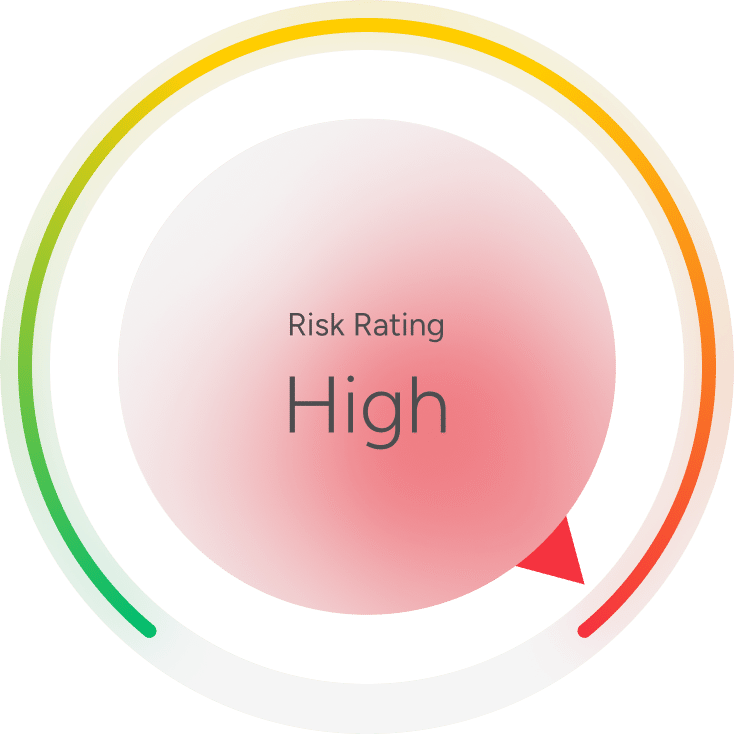
Rating Criteria
Rating Criteria Detail
Corporate Weaponization
Criteria:
Has canceled customers, suppliers, or vendors due to their political views or religious beliefs OR corporately boycotts, divests, or sanctions regions, people groups, or industries.
Risk Level:
HighRationale:
Criteria:
Charitable giving (including employee matching programs) policies or practices discriminate against charitable organizations based on views or religious beliefs.
Risk Level:
LowerCriteria:
Employment policies fail to protect against viewpoint or other discrimination and/or are ideological in nature.
Risk Level:
HighRationale:
Danske Bank appears to prioritize diversity over merit in its recruitment. From its Diversity and Inclusion news article: “This is why Danske Bank has partnered with the start-up Develop Diverse whose software automatically scans the bank’s job adverts for biases that could attract or discourage different groups of applicants, such as a certain gender, age or ethnicity” (1). The company appears to prioritize diversity over merit in its business structure through the establishment of gender targets for its leadership composition. The company is seeking a 40/60 proportion of women to men in Level 2, Level 3, and Senior leaders by 2028 (2). The company protects its employees against viewpoint discrimination (3).
Corporate Governance and Public Policy
Criteria:
Uses corporate reputation to support causes, organizations, or policies hostile to freedom of expression.
Risk Level:
HighRationale:
Danske Bank was part of the Net Zero Asset Managers initiative prior to NZAM’s suspension in 2025. Its membership indicated a commitment to carbon neutrality with its investments by 2050 (1)(2)(3). The company is a signatory of the 2026 relaunch of the Net Zero Asset Managers Initiative, which provides resources to asset managers to aid in setting climate goals. Based on the company’s NZAM profile page, it has individually committed to 50% reduction of the weighted average carbon intensity by 2030 (4)(5)(6). The company is a member of the Net Zero Banking Alliance, which formerly required a commitment to net zero carbon emissions by 2050. However, in April 2025, the NZBA dropped that commitment as a requirement for membership but still expects members to align their climate targets with limiting global warming to below 2 degrees Celsius by 2100 (7)(8)(9)(10). The company is a member of the Partnership for Carbon Accounting Financials, committed to net zero carbon emissions by 2050 (11)(12)(13). The company is a member of Climate Action 100+, committed to carbon neutrality by 2050 (14)(15). The company was part of the Net Zero Asset Managers initiative, committed to carbon neutrality with its investments by 2050 (16)(17)(18). The company supports DEI within its business practices, employing a DEI Council and Officer (19). The company enacted a Transgender Instruction in 2021, meant to “provide workplace support for transgender colleagues and those in the process of gender transition” (20). The company hosted a diversity week in August 2024, meant to “promote even greater inclusion and diversity” (21)(22).
Criteria:
Uses corporate funds to advance ideological causes, organizations, or policies hostile to freedom of expression.
Risk Level:
HighRationale:
Danske Bank provides a benefits package for transgender employees that includes “three days leave to attend medical appointments and an additional 10 days leave to address matters relating to their transition, in line with the Bank’s Special Leave policy, and a flexible dress code” (1). The company helped sponsor the Copenhagen Pride parade in 2019 and hosted speakers for the 2020 parade (2). The company was also a partner of WorldPride in 2021 (3). Otherwise, there are no publicly known cases of the company using corporate funds to advance ideological causes, organizations, or policies (4).
Related Companies
Banks, Diversified Financials

JPMorgan Chase

Banks, Diversified Financials
BMO Harris
Banks, Diversified Financials

Bank of America

Banks
PNC Financial Services Group

Banks, Diversified Financials
Wells Fargo

Banks
Fifth Third Bank (5/3 Bank)

Banks
U.S. Bancorp

Banks
Truist Financial

Banks, Diversified Financials
Capital One Financial
Banks, Diversified Financials
Morgan Stanley