Fitch Group
Companies who scored 100% on the 2023-2024 Corporate Equality Index.
Companies who scored 100% on the 2025 Corporate Equality Index.
Companies that scored a 100 on the 2026 Corporate Equality Index.
Companies that likely use Benevity to vet charitable recipients, thereby discriminating against mainstream advocacy organizations through the SPLC's overly broad "Hate List."
These companies are committed to leveraging shareholder or investor assets for net-zero emission goals and climate ambitions for GFANZ, Climate Action 100+, CERES, PCAF, UN PRI, NZLA, FIT, or HSCP.
Companies that offer so-called transgender healthcare for their employees and covered dependents.

Rating Overview
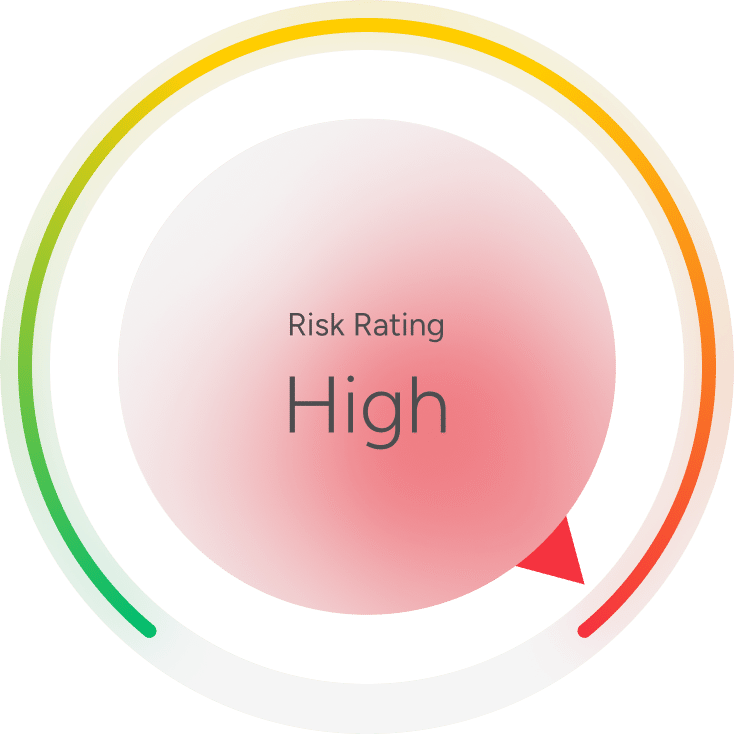
Rating Criteria
Rating Criteria Detail
Corporate Weaponization
Criteria:
Has canceled customers, suppliers, or vendors due to their political views or religious beliefs OR corporately boycotts, divests, or sanctions regions, people groups, or industries.
Risk Level:
HighRationale:
Fitch Group received a score of 100 on the 2026 Corporate Equality Index (CEI) from the Human Rights Campaign (HRC), a political stakeholder group. The company recruits employees based on sexual identity issues. The company discriminates against vendors that do not promote divisive sex and gender policies, indicating it prioritizes sexual issues over merit (1)(2)(3). The company received a score of 100 on the 2025 Corporate Equality Index (CEI) from the Human Rights Campaign (HRC), a political stakeholder group. The company recruits employees based on sexual identity. The company discriminates against vendors that do not promote divisive sex and gender policies, indicating it prioritizes sexual issues over merit (4)(5). Fitch Group is a signatory of the Principles for Responsible Investment, incorporating ESG issues into investment analysis, decision-making, and other business practices (6)(7)(8). The company integrates ESG into its business practices. From its Environmental Sustainability page: “Partner with suppliers that comply with Fitch’s Supplier Code of Conduct and have carbon reduction targets in place, to aid in achieving our Net Zero target” (9). Fitch Group integrates DEI into its supply chain. From its Supplier Code of Conduct: “We expect our Suppliers (and their suppliers) to align with our values and principles, adhering to responsible and sustainable business practices, leveraging diverse suppliers when possible, contributing to their communities, and actively managing their own supplier relationships” (10). The company promotes divisive sex and gender policies. Its Supplier Code of Conduct requires international vendors to include sexual orientation and gender identity in their nondiscrimination policy (11). However, Fitch Group has not publicly canceled customers, suppliers, or vendors based on political views or religious beliefs (12).
Criteria:
Charitable giving (including employee matching programs) policies or practices discriminate against charitable organizations based on views or religious beliefs.
Risk Level:
HighRationale:
Fitch Group’s HRC 2026 CEI rating indicates the company will not donate to non-religious charities unless they embrace controversial sexual identity policies (1)(2)(3). The company’s HRC 2025 CEI rating indicates the company will not donate to non-religious charities unless they embrace controversial sexual identity policies (4)(5). Fitch Group likely uses Benevity as its charitable giving platform. Benevity vets charities according to the Southern Poverty Law Center’s Hate List, which includes mainstream libertarian, conservative, family, and religious advocacy organizations (6)(7)(8)(9)(10). The company does not appear to discriminate against charitable organizations based on views or beliefs (11).
Criteria:
Employment policies fail to protect against viewpoint or other discrimination and/or are ideological in nature.
Risk Level:
HighRationale:
Fitch Group’s HRC 2026 CEI rating indicates the company forces employees to attend at least one, controversial training on gender identity, sexual orientation, transgender issues, and divisive racial ideology. The company provides gender transition guidelines for its employees and a specific benefits guide with a comprehensive explanation of transgender services funded by the company (1)(2)(3). The company’s HRC 2025 CEI rating indicates the company forces employees to attend multiple, controversial trainings on gender identity, sexual orientation, transgender issues, and divisive racial ideology. The company provides gender transition guidelines for its employees and a specific benefits guide with a comprehensive explanation of transgender services funded by the company (4)(5). Fitch Group is a member of myGwork, a professional job and networking platform that connects employers with LGBTQ+ professionals and advances workplace diversity and inclusion initiatives. Corporate membership benefits vary by level and include LGBTQ+-focused services in areas such as talent recruitment, job postings, employer branding, employee engagement, DEI programming and training, and media exposure (6)(7)(8). The company is an affirmative action employer. “We are an Equal Employment/Affirmative Action employer” (9). Fitch Group does not provide viewpoint protections for its employees (10).
Corporate Governance and Public Policy
Criteria:
Uses corporate reputation to support causes, organizations, or policies hostile to freedom of expression.
Risk Level:
HighRationale:
Fitch Group’s HRC 2026 CEI rating indicates the company potentially agrees to allow a controversial stakeholder group focused on sexual identity issues to dictate marketing or advertising strategy. By doing so, the company risks dividing employees, alienating customers and harming shareholders (1)(2)(3). The company’s HRC 2025 CEI rating indicates the company agrees to allow a controversial stakeholder group focused on sexual identity issues to dictate marketing or advertising strategy. By doing so, the company risks dividing employees, alienating customers and harming shareholders (4)(5). Fitch Group’s CEO, Paul G. Taylor, signed the CEO Action for Diversity & Inclusion pledge, which includes a commitment to promote DEI through bias education training in the workplace, strategize on DEI programs/initiatives with other signatories, and engage boards of directors when developing and evaluating DEI strategies (6)(7). The company is committed to net zero emissions by 2040 (8)(9). Fitch Group supports DEI within its business practices. From its Careers page: “Fitch is committed to being a diverse and inclusive workplace where we leverage our employee’s unique backgrounds and perspectives to drive growth and innovation. We believe that increasing diversity and improving inclusiveness is critical to our success today and in the future” (10). The company supports ESG within its business practices. From its General ESG Approach Report: “This report describes Fitch Ratings’ approach to addressingcenvironmental (E), social (S) and governance (G) considerations in its credit analysis, and to assessing and disclosing the relevance and
materiality of those considerations to our individual, public
international-scale credit rating decisions globally across sector” (11)(2). Fitch Group received a letter from 23 attorney generals demanding an explanation for downgrading the rating of fossil-fuel companies based on ESG factors (12)(13). The company scored a 95 out of 100 on the 2023-2024 Corporate Equality Index (CEI) from the Human Rights Campaign (HRC), a political stakeholder group (14)(15).
Criteria:
Uses corporate funds to advance ideological causes, organizations, or policies hostile to freedom of expression.
Risk Level:
HighRationale:
Fitch Group’s HRC 2026 CEI rating indicates the company covers transgender related costs for its employees and their children, including paid short-term leave, puberty blockers, cross-sex hormones, chest surgeries, genital surgeries, medical visits, lab monitoring, and mental health benefits. The company also covers at least five of the following services: reconstructive hair removal, cosmetic hair removal, tracheal shave or reduction, facial surgeries, voice modification surgery, voice modification therapy, lipoplasty or filling for body masculinization or feminization, and travel and lodging expenses. Additionally, the company has potentially pledged philanthropic support of at least one organization or event that promotes sex and gender ideology. By allowing a political stakeholder group to dictate operations, the company increases health care costs and risks dividing employees, alienating customers and harming shareholders (1)(2)(3)(4). The company’s HRC 2025 CEI rating indicates the company covers transgender related costs for its employees and their children, including paid short-term leave, puberty blockers, cross-sex hormones, chest surgeries, genital surgeries, medical visits and lab monitoring, travel and lodging. Additionally, the company has pledged philanthropic support of at least one organization or event that promotes sex and gender ideology. By allowing a political stakeholder group to dictate operations, the company increases health care costs and risks dividing employees, alienating customers and harming shareholders (5)(6). Fitch Group sponsored the OPEN Finance Forum’s Visibility to Viability – What LGBTQ+ Inclusion Needs Now (7). The company sponsored a Work (LGBTQ) Pride 2026 session (8). Otherwise, there are no publicly known cases of Fitch Group using corporate funds to advance ideological causes, organizations, or policies (9).
Criteria:
Uses corporate political actions and/or financial contributions for ideological, non-business purposes.
Risk Level:
HighRationale:
Fitch’s HRC 2025 CEI rating indicates the company publicly advocated for controversial sex and gender ideology through local, state or federal legislation or initiatives. By allowing a political stakeholder group to dictate operations, the company risks dividing employees, alienating customers and harming shareholders (1)(2). The company does not operate a PAC or engage in lobbying at this time (3)(4)(5).
Related Companies
Banks, Diversified Financials

JPMorgan Chase

Banks, Diversified Financials
BMO Harris
Banks, Diversified Financials
Bank of America

Banks, Diversified Financials
Wells Fargo

Diversified Financials
Berkshire Hathaway
Banks, Diversified Financials
Capital One Financial

Diversified Financials
American Express

Banks, Diversified Financials
Morgan Stanley

Diversified Financials
Mastercard

Diversified Financials
Visa