
Royal Bank of Canada (RBC)
Companies who scored 100% on the 2023-2024 Corporate Equality Index.
Companies who scored 100% on the 2025 Corporate Equality Index.
Companies that scored a 100 on the 2026 Corporate Equality Index.
Companies that likely use Benevity to vet charitable recipients, thereby discriminating against mainstream advocacy organizations through the SPLC's overly broad "Hate List."
These companies are committed to leveraging shareholder or investor assets for net-zero emission goals and climate ambitions for GFANZ, Climate Action 100+, CERES, PCAF, UN PRI, NZLA, FIT, or HSCP.
Companies that offer so-called transgender healthcare for their employees and covered dependents.

Rating Overview
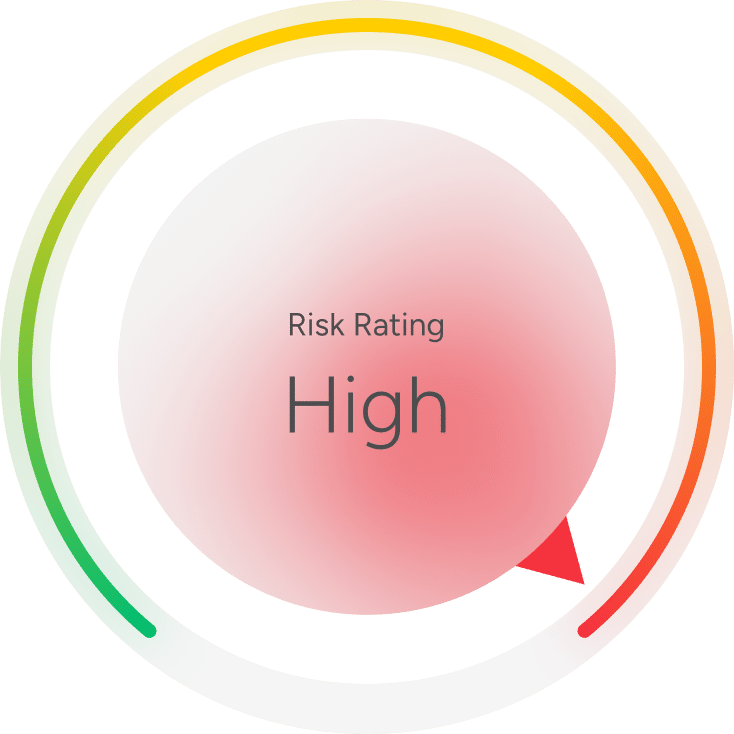
Rating Criteria
Rating Criteria Detail
Corporate Weaponization
Criteria:
Has canceled customers, suppliers, or vendors due to their political views or religious beliefs OR corporately boycotts, divests, or sanctions regions, people groups, or industries.
Risk Level:
HighRationale:
On March 10, 2023 RBC was placed on Arkansas’s Restricted Financial Institution List after review by its ESG Oversight Committee for “discriminat[ing] against energy, fossil fuel, firearms, or ammunition companies” or otherwise refusing to deal with companies based on ESG factors,” pursuant to Act 411 (Ark. Code Ann. § 25-1-1001 et seq.). Prior to inclusion, RBC was given 30 days from receipt of written notice from the state of its intent to add the company to the list to demonstrate that it was not engaging in the alleged discrimination. In Arkansas’s view, RBC did not sufficiently rebut the allegations and was therefore included on the 2024 list. Under Ark. Code Ann. § 25-1-1006(d), if the Governor of Arkansas “determines that a financial services provider has begun or ceased to discriminate” against companies based on ESG factors, the Governor “may reestablish the committee at any time” to reassess and update the list accordingly (1)(2)(3). In 2020, RBC announced that it would not directly finance new oil and gas exploration and development in the Arctic region, including the Arctic National Wildlife Refuge, according to its internal policies and publicly available statements. This commitment reflects increasing integration of environmental and social risk considerations into financing decisions related to Arctic oil and gas development (4)(5). RBC Wealth Management received a score of 100 on the 2026 Corporate Equality Index (CEI) from the Human Rights Campaign (HRC), a political stakeholder group. The company recruits employees based on sexual identity issues. The company discriminates against vendors that do not promote divisive sex and gender policies, indicating it prioritizes sexual issues over merit (6)(7)(8). Royal Bank of Canada received a score of 100 on the 2025 Corporate Equality Index (CEI) from the Human Rights Campaign (HRC), a political stakeholder group. The company recruits employees based on sexual identity issues. The company discriminates against vendors that do not promote divisive sex and gender policies, indicating it prioritizes sexual issues over merit (9)(10). Ezra Levant, the founder of right-wing Canadian news site Rebel News, has alleged that RBC denied the news site a mortgage loan for a new office due to the site’s political leanings (11)(12). In the released phone call, an RBC representative stated that the bank was trying to move away from lending to “strongly opinionated” and controversial media entities in a general sense (13).
Criteria:
Charitable giving (including employee matching programs) policies or practices discriminate against charitable organizations based on views or religious beliefs.
Risk Level:
HighRationale:
RBC Wealth Management’s HRC 2026 CEI rating indicates the company will not donate to non-religious charities unless they embrace controversial sexual identity policies (1)(2)(3). Royal Bank of Canada’s HRC 2025 CEI rating indicates the company will not donate to non-religious charities unless they embrace controversial sexual identity policies (4)(5). The bank’s charitable grant guidelines require that organizations abide by its nondiscrimination policy, including on the basis of sexual orientation and gender identity, thereby excluding some religious charities (6). RBC likely uses Benevity as its charitable giving platform. Benevity vets charities according to the Southern Poverty Law Center’s Hate List, which includes mainstream libertarian, conservative, family, and religious advocacy organizations (7)(8)(9).
Criteria:
Employment policies fail to protect against viewpoint or other discrimination and/or are ideological in nature.
Risk Level:
HighRationale:
RBC Wealth Management’s HRC 2026 CEI rating indicates the company forces employees to attend at least one, controversial training on gender identity, sexual orientation, transgender issues, and divisive racial ideology. The company provides gender transition guidelines for its employees and a specific benefits guide with a comprehensive explanation of transgender services funded by the company (1)(2)(3). Royal Bank of Canada’s HRC 2025 CEI rating indicates the company forces employees to attend multiple, controversial trainings on gender identity, sexual orientation, transgender issues, and divisive racial ideology. The company provides gender transition guidelines for its employees and a specific benefits guide with a comprehensive explanation of transgender services funded by the company (4)(5). RBC does not provide viewpoint protections for its employees (6).
Corporate Governance and Public Policy
Criteria:
Uses corporate reputation to support causes, organizations, or policies hostile to freedom of expression.
Risk Level:
HighRationale:
RBC Wealth Management’s HRC 2026 CEI rating indicates the company potentially agrees to allow a controversial stakeholder group focused on sexual identity issues to dictate marketing or advertising strategy. By doing so, the company risks dividing employees, alienating customers and harming shareholders (1)(2)(3). Royal Bank of Canada’s HRC 2025 CEI rating indicates the company agrees to allow a controversial stakeholder group focused on sexual identity issues to dictate marketing or advertising strategy. By doing so, the company risks dividing employees, alienating customers and harming shareholders (4)(5). RBC signed an open letter endorsing the Equality Act, a contentious proposal to amend the 1964 Civil Rights Act by adding sexual orientation and so-called gender identity as protected categories. The legislation would, among other implications, grant biological men access to women-only spaces such as sports teams and public restrooms, and compel healthcare providers to deliver sex-denying healthcare (6)(7)(8). The bank has opposed the Florida Parental Rights in Education Act, which prohibits teaching gender identity and sexual orientation in schools to kids in K-3rd grade (9). RBC is a PCAF member, committed to net zero carbon emissions by 2050 (10)(11). The bank signed an amicus brief in opposition to the 2016 North Carolina bathroom bill HB2, which required people to use the bathroom of their biological sex (12). RBC opposed various state and local legislation intended to protect parental rights, girls’ sports, bathroom facilities, and gendered spaces (13)(14). The bank opposed legislation in Iowa intended to protect parental rights, girls’ sports, bathroom facilities, and gendered spaces (15). RBC’s former CEO, John Thurlow, signed the CEO Action for Diversity & Inclusion pledge, which includes a commitment to promote DEI through bias education training in the workplace, strategize on DEI programs/initiatives with other signatories, and engage boards of directors when developing and evaluating DEI strategies (16)(17). RBC had a history of “to achieve net-zero emissions in our lending by 2050” (18). However, in April 2025, the company “retir[ed] our sustainable finance commitment” and is “considering potential changes to our overall approach to sustainable finance” (19)(20). In April 2026, RBC also “retired their 2030 targets to reduce financed emissions for key carbon-intensive sectors” (21).
Criteria:
Uses corporate funds to advance ideological causes, organizations, or policies hostile to freedom of expression.
Risk Level:
HighRationale:
RBC Wealth Management’s HRC 2026 CEI rating indicates the company covers transgender related costs for its employees and their children, including paid short-term leave, puberty blockers, cross-sex hormones, chest surgeries, genital surgeries, medical visits, lab monitoring, and mental health benefits.The company also covers at least five of the following services: reconstructive hair removal, cosmetic hair removal, tracheal shave or reduction, facialsurgeries, voice modification surgery, voice modification therapy, lipoplasty or filling for body masculinization or feminization, and travel and lodging expenses. Additionally, the company has potentially pledged philanthropic support of at least one organization or event that promotes sex and gender ideology. By allowing a political stakeholder group to dictate operations, the company increases health care costs and risks dividing employees, alienating customers and harming shareholders (1)(2)(3)(4). Royal Bank of Canada’s HRC 2025 CEI rating indicates the company covers transgender related costs for its employees and their children, including paid short-term leave, puberty blockers, cross-sex hormones, chest surgeries, genital surgeries, medical visits and lab monitoring, travel and lodging. Additionally, the company has pledged philanthropic support of at least one organization or event that promotes sex and gender ideology. By allowing a political stakeholder group to dictate operations, the company increases health care costs and risks dividing employees, alienating customers and harming shareholders (5)(6). RBC allegedly donated to Planned Parenthood, but the bank has since clarified that it does not corporately donate to Planned Parenthood (7)(8). The bank pledged $1.5 million to Black Lives Matter and related causes (9)(10). City National Bank is a corporate partner of the National LGBT Chamber of Commerce (11). RBC Wealth Management is a sponsor of Twin Cities Pride 2026 (12). RBC Wealth Management sponsored the 2018, 2019, 2020, 2023, 2024, and 2025 Proxy Preview, the nation’s leading pro-ESG, annual proxy report. This information is released to inform and equip socially progressive foundations, religious groups, pension funds, and tax-exempt organizations (13)(14)(15)(16)(17)(18)(19). Royal Bank of Canada is a Member of Out Leadership, a global network of LGBT+ business leaders from major companies that seeks to advance LGBTQ+ representation in corporate leadership and integrate LGBTQ+ priorities into workplace strategies. The first LGBTQ+ B-Corporation, Out Leadership accomplishes this through convening leadership summits, directing talent initiatives, and providing advisory solutions that emphasize the positive impact of LGBT+ inclusion for business (20)(21)(22)(23). RBC has donated between $1,000 and $2,499 to Compassion & Choices (C&C), a nonprofit organization that advocates for the expansion of physician-assisted suicide and related practices including medical aid in dying (MAID), voluntarily stopping eating and drinking (VSED), palliative sedation that “advances the time of death,” and dementia directives that allow patients to refuse food and fluids. C&C also advances legislation, litigation, and federal policy to prevent healthcare providers and institutions from limiting patients’ access to life-ending practices on ethical, religious, or conscience-based grounds (24)(25)(26)(27)(28). Otherwise, there are no publicly known cases of the bank using corporate funds to advance ideological causes, organizations, or policies (29).
Criteria:
Uses corporate political actions and/or financial contributions for ideological, non-business purposes.
Risk Level:
HighRationale:
Royal Bank of Canada’s HRC 2025 CEI rating indicates the company publicly advocated for controversial sex and gender ideology through local, state or federal legislation or initiatives. By allowing a political stakeholder group to dictate operations, the company risks dividing employees, alienating customers and harming shareholders (1)(2). RBC has not used its PAC donations for ideological purposes and has not reported on its lobbying (3)(4)(5).
Related Companies

Banks, Diversified Financials

JPMorgan Chase

Banks, Diversified Financials
BMO Harris

Banks, Diversified Financials

Bank of America

Banks
PNC Financial Services Group

Banks, Diversified Financials
Wells Fargo

Banks
Fifth Third Bank (5/3 Bank)

Banks
U.S. Bancorp

Banks
Truist Financial

Banks, Diversified Financials
Capital One Financial

Banks, Diversified Financials
Morgan Stanley