
Angel Oak Companies
These companies are committed to leveraging shareholder or investor assets for net-zero emission goals and climate ambitions for GFANZ, Climate Action 100+, CERES, PCAF, UN PRI, NZLA, FIT, or HSCP.
The biggest 3000 companies in the U.S. in the year of 2025.
Rating Overview
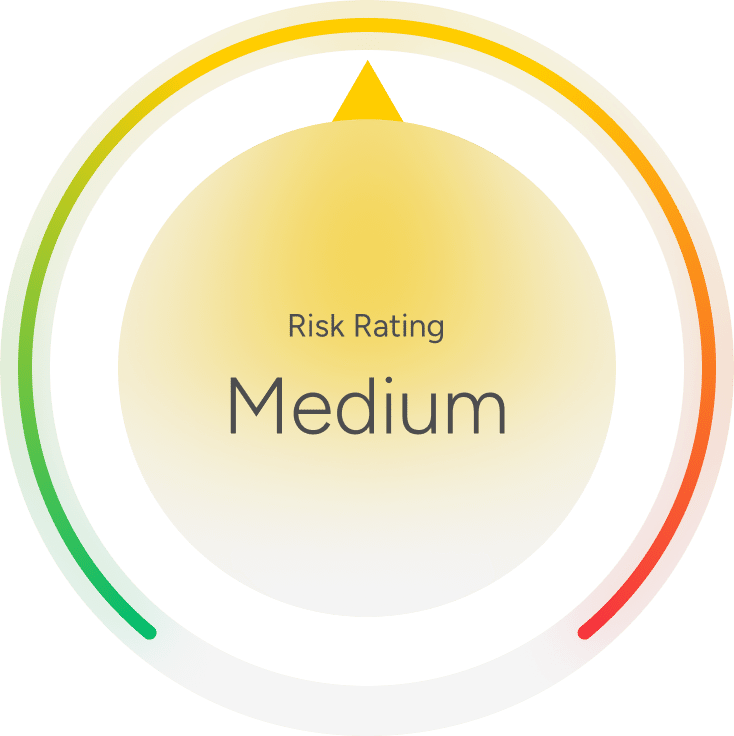
Rating Criteria
Rating Criteria Detail
Corporate Weaponization
Criteria:
Has canceled customers, suppliers, or vendors due to their political views or religious beliefs OR corporately boycotts, divests, or sanctions regions, people groups, or industries.
Risk Level:
MediumRationale:
Angel Oak is a signatory of the Principles for Responsible Investment, incorporating ESG issues into investment analysis, decision-making, and other business practices (1)(2)(3). The company integrates ESG into its business practices. From their 2022 CSR report, Angel Oak uses over $2BN dollars of client funds to promote ESG through asset management (4)(5). From its 2021 Corporate Social Responsibility Report: “Angel Oak has embarked on a journey to integrate ESG principles across the organization’s activities” (6). However, the company has not canceled customers, suppliers, or vendors based on political views or religious beliefs (7).
Criteria:
Charitable giving (including employee matching programs) policies or practices discriminate against charitable organizations based on views or religious beliefs.
Risk Level:
LowerRationale:
Angel Oak does not appear to discriminate against charitable organizations based on views or beliefs (1).
Criteria:
Employment policies fail to protect against viewpoint or other discrimination and/or are ideological in nature.
Risk Level:
HighRationale:
Angel Oak appears to prioritize diversity over merit in its recruitment program. From its 2022 Corporate Sustainability Report: “The DEIC’s goals for 2022 focused on… Recruitment and retention of underrepresented talent” (1)(2). The company requires all employees to take unconscious bias and diversity training (3)(4). The company does not provide viewpoint protections for its employees (5).
Corporate Governance and Public Policy
Criteria:
Uses corporate reputation to support causes, organizations, or policies hostile to freedom of expression.
Risk Level:
HighRationale:
Angel Oak Capital was part of the Net Zero Asset Managers initiative prior to NZAM’s suspension in 2025. Its membership indicated a commitment to carbon neutrality with its investments by 2050 (1)(2)(3). The company is a member of the Partnership for Carbon Accounting Financials, committed to net zero carbon emissions by 2050 (4)(5)(6). The company supports DEI within its business practices, hosting a DEI Committee and employing a DEI officer (7). The company supports ESG within its business practices. From its 2021 Sustainability Report: “As part of its investment process, the Adviser [Angel Oak] also considers certain environmental, social and governance (“ESG”) and sustainability factors… Examples of the types of factors… include, without limitation: environmental issues, such as carbon emissions and energy efficiency… and corporate governance issues, such as board independence and diversity” (8). The company supports ESG within its business practices, by hosting an ESG task force (9). In addition, Angel Oak’s Senior strategist is a member of SFA’s ESG task force (10)(11). The company partnered with the Carbon Disclosure Project (CDP), a non-profit activist group dedicated to environmental impact goals like Net Zero: “Angel Oak is an investor in CDP and in 2022 continued a multiyear project to encourage community banks in which we are invested to disclose their carbon-and emissions-related information to help transition our economy” (12)(13)(14).
Criteria:
Uses corporate funds to advance ideological causes, organizations, or policies hostile to freedom of expression.
Risk Level:
HighRationale:
Angel Oak partnered with Fixed Income Investor Network’s ESG Task Force (1)(2). The company partnered with Structured Finance Association’s (SFA’s) ESG Task Force (3)(4). The company partnered with the Carbon Disclosure Project (CDP), a non-profit activist group dedicated to environmental impact goals like Net Zero (5)(6)(7). Otherwise, there are no publicly known cases of Angel Oak using corporate funds to advance ideological causes, organizations, or policies (8).
Related Companies

Banks, Diversified Financials

JPMorgan Chase

Banks, Diversified Financials
BMO Harris
Banks, Diversified Financials

Bank of America

Banks, Diversified Financials
Wells Fargo

Diversified Financials
Berkshire Hathaway

Banks, Diversified Financials
Capital One Financial

Diversified Financials
American Express

Banks, Diversified Financials
Morgan Stanley

Diversified Financials
Mastercard

Diversified Financials
Visa